








CSR - my promises to you & Mother Earth
CSR report - Corporate Social Responsibility - social responsibility, sustainability, and social accountability
Camilles Cacao Love started in April 2018 because I wanted ceremonial cacao to be much more accessible to you in Denmark - both by spreading awareness and making it easier to obtain.
I myself had experienced such profound healing within myself and in my relationship with my body after ceremonial cacao found its way into my life.
However, I quickly discovered that transparency regarding the origin of ceremonial cacao was lacking. Those I chose to buy from either didn't know where they sourced theirs or weren't interested in sharing too much about the origin.
In a way, this is understandable, as it can be a trade secret that could harm one's business. But since I couldn't get even a minimum of information, I decided at the end of 2018 to start importing ceremonial cacao from Peru myself, which has been calling to me ever since the beginning.
Organizations Camilles Cacao Love donates to
I make it a point to collaborate with and donate a portion of the profits on a monthly basis to organizations that do important work. Important work for our Mother Earth, who has bestowed upon us ceremonial cacao. But also organizations that do important work for the people who are part of bringing Camilles Cacao Love to you - directly or indirectly.
-
Indigenous Rights - Survival International: Since its inception in 1969, the organization's goal has been to protect indigenous tribes worldwide. Especially those tribal peoples who do not wish to have contact with civilization. Their important work is to ensure their survival and right to their land, which is often not respected by many countries' authorities and private initiatives, but is instead plundered for resource extraction, oil drilling, or mining.
This is an indirect support, as Survival International does not directly work with the indigenous tribes that supply cacao to Camilles Cacao Love. But it is close to my heart, as I value how these tribes are allowed to live their lives in freedom - without stronger economic and powerful entities robbing them of their lives and land.
Every month, $50 is donated to Survival International, providing an annual support of approximately DKK 4100,-
-
A tree is planted for every bag of Camilles Cacao Love sold - Eden: People + Planet
Previously, I donated to Treesisters.org, which also plants trees worldwide to ensure a beautiful and sustainable planet. I have now chosen to support Eden: People + Planet, which does important work planting trees in Central and South America, Africa, and Asia. This helps ensure Mother Earth's ecosystem, but also provides employment for people around the world, who primarily own the trees.
Planting a tree costs between $0.15-$0.33, depending on where in the world it is planted. So here, the highest price is taken and donated per sold bag of Camilles Cacao Love, which corresponds to 2.26 Danish kroner.
Sustainability - for Mother Earth's sake
Transportation & environment
-
Transportation in Peru: Transportation from the cooperative in Atalaya to Camilles Cacao Love leaves the port in Peru, only using natural gas for transport. Natural gas is the most environmentally friendly form of fuel among the options currently available in Peru, as it emits less CO2 than other alternatives.
-
Transportation from Peru by ship: Only ship transport is used for importing Camilles Cacao Love from Peru. This takes longer and is more uncertain, but leaves a smaller CO2 footprint, which is why this transport is chosen over air travel (7 days versus 35 days).
-
Electricity instead of oil: In the production or use of machinery, only electricity is used, and no forms of oil, which was once the only option.
-
Collaboration with the environmental organization Profonanpe: We collaborate with the Peruvian environmental organization Profonanpe (you can read about their work in English) to ensure the sustainability of the Amazon rainforest. This helps secure Mother Earth's lungs - preserving resources and improving life for Achuar and Kiwcha communities in Datem of Marañón. This is not where your Camilles Cacao Love comes from, but it is important work as it is one of the most vital carbon reserve zones in the Amazon in Peru (in addition to 8 other countries).
-
Focus on sustainability in packaging: Packaging is kept as sustainable and recyclable as possible to conserve Mother Earth's resources. More about this can be found in the next section, "Packaging."
-
Organic at all times: All products in the shop that can be certified organic are chosen over non-organic products. Occasionally, labeling regulations under Danish law are very strict, making organic labeling impossible, but in such cases, it is ensured that the company can document other forms of consideration for the planet.
However, organic certificates are obtained from suppliers annually to ensure that they still comply with organic requirements.
-
Sustainable resources - harvest and profit: Some plants and other resources from our Mother Earth are in danger of extinction or are being over-exploited for profit. Therefore, some items are not included in the assortment, such as cheap crystals - simply because someone somewhere has received too little for their work, as they can be so cheap. This applies to all types of goods - this was just an example.
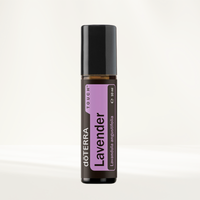
The same also applies to plants and food products that require high responsibility and ethics, as improper harvesting methods can prevent the plant from yielding more - despite it being a perennial plant. This largely applies to doTERRA's products, which have a high level of responsibility in this regard (and therefore are the only brand of essential oils in the shop).

Visit to the cooperative in Atalaya with Luis, Maribel & Fernando (to the right of Michael and me).
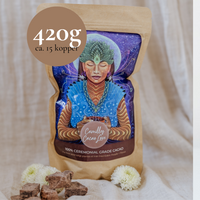
Your ceremonial cacao from Camilles Cacao Love
-
Direct collaboration with farmers: This makes the following bullet points possible, which you can read about below. It also ensures that they themselves determine which resources they pass on to the cooperative, and no felling of farmland or rainforest occurs, which is a huge problem around the Amazon. This is a huge problem as it destroys Mother Earth's climate. Therefore, it is an important collaboration to have - both for the independence of the individual farm and for the rest of the climate.
-
In case of bad weather conditions or illness, farmers are compensated: If, unfortunately, there are unstable weather conditions that affect the cacao bean harvest or have any impact on the farmers' land, they are compensated. The same applies to more serious illnesses, where the cooperative ensures they help them.
-
Proper conditions for optimization: The cooperative in Atalaya helps and trains the 155 farmers so they get the most out of their harvest. This could include proper conditions for more stable solar drying by building a small greenhouse for solar drying - rather than simply laying them out to dry in the sun, as this utilizes the sun's heat better.
-
When converting a farm, they are trained to get more out of their land: If a farmer chooses to convert their farm, they receive advice and guidance to get the most out of their land before the cacao tree offers its largest yield, which occurs after 3-5 years. In the meantime, they are therefore often advised to grow banana or yucca trees, as these shade the sun and provide nourishment. The cacao tree is more sensitive to sunlight in the first few years, and therefore these trees - in addition to being a source of extra food - serve to ensure the best possible survival for the cacao tree.
-
Laboratory tests: With every batch of Camilles Cacao Love, laboratory tests are always conducted before it leaves Peru to ensure that the content of heavy metals and bacteria complies with the maximum values set by the EU for food products.
-
Equality: In the collaborations entered into in Peru to ensure logistics are in order (such as paperwork, transportation, etc.), it is ensured that there is some form of policy regarding gender and equality. Therefore, Sustainability Reports are obtained from these companies, or I ensure that good conditions are present.
This is not ensured for the farmers, as many of those who provide cacao beans to Camilles Cacao Love are indigenous tribes, and it is a completely different culture that I greatly respect. It cannot be compared to ours, and therefore modern equality and gender representation and distribution are not possible.
-
No child labor tolerated: Children must be ensured their right to be children and to education, and no one is employed for work, which is a problem in many places in the world with chocolate, mining, etc.
However, we must remember that the culture is different among indigenous tribes, as the chief's children will take over this role later, and after a certain age, they will take over responsibility. Therefore, they will naturally be part of the work, as they are part of the tribe.

Packaging
-
Reusable plastic packaging as the most sustainable solution: Grounding Spice Mix is packed in plastic bags, allowing the product to be reused. Therefore, it is also important that the packaging is sorted as plastic waste, aligning with the intention for the best solution and minimal climate impact. Produced in the EU.
-
Most sustainable choice based on Danish food legislation: 2. Plastic has a bad reputation for good reasons, but since it is as recyclable as possible, it is also important to say that 1. glass is more demanding to produce than many other materials.
2. Aluminum, if not sorted as aluminum, will not be properly recycled, which is not possible, as the bags previously contained paper and aluminum, so they could not be sorted properly. Many producers do not have this option, as this layer of aluminum is required for food packaging to comply with food legislation. Therefore, we encourage you to sort our products correctly, as this can make an important difference as to whether the packaging is most sustainable or not.
-
Warehouse and I reuse all boxes we receive: We reuse the boxes we receive Camilles Cacao Love in from Peru as an option for shipping when you order. Therefore, we encourage you to do the same, if you need to send something yourself or need a good storage solution that costs you nothing.
I also reuse all packaging I receive myself, if it is me and not the warehouse that has a shipment to send.
-
Packaging filler is minimum 50% recycled: To ensure that your goods arrive and are received in good condition, the warehouse uses plastic filler made of at least 50% recycled plastic for packing. For some packages, seaweed from Danish beaches is also used.
- All packages FSC-certified: The fact that all packages, if not reused, are FSC-certified, means that the resources used to make the boxes originate from sources with responsible forest management. This is for both Mother Earth and to ensure good conditions for the people behind it.
I hope that with this transparency, I can give you inner peace knowing that great care is taken for Mother Earth, the people involved - and thereby our future.
I also hope the same for other companies - that this can inspire them to have the same consideration and transparency.
And for you who order and thereby support a larger vision - that you gain greater awareness of your consumption and how you can make a difference by supporting companies with a big heart.
If you have any unanswered questions, you are always welcome to write.